
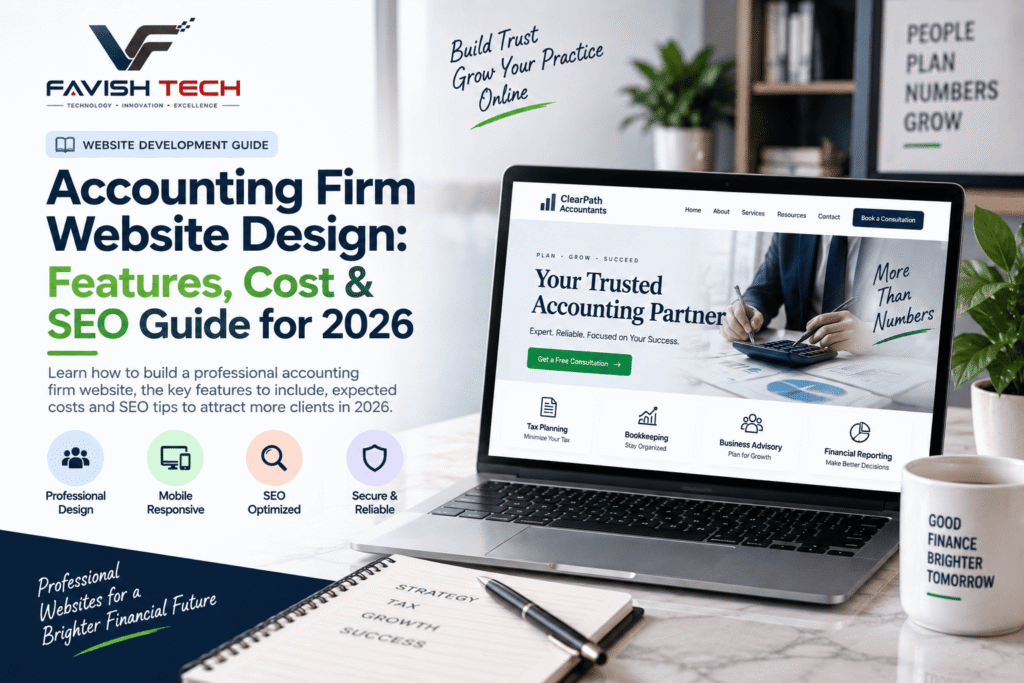
When someone needs an accountant, whether it’s a small business owner looking for bookkeeping help or an individual searching for tax filing support, they almost always start with a Google search. They’ll compare a few firms, check credentials, look at services offered, and decide who to trust with their finances before ever picking up the phone. If your firm’s website looks outdated or doesn’t clearly explain what you do, potential clients will move on to a competitor that made a better first impression online.
Accounting is a trust-based service. People are handing over sensitive financial information and relying on your expertise, so your website needs to project credibility from the first click.
Why Accounting Firms Need a Professional Website
Unlike more visual businesses, accounting firms sell expertise and trust rather than products or aesthetics. That changes what your website needs to prioritize.
A well-built website should:
- Clearly communicate your services and areas of specialization
- Establish credibility through credentials, experience, and client results
- Make it simple for potential clients to schedule a consultation
- Rank in search results when people search for accounting help in your area
- Answer common financial questions that build trust before a client ever calls
Without this, even a highly qualified firm can struggle to attract new clients, simply because visitors couldn’t quickly understand what the firm offers or why they should trust it.
Must-Have Features for an Accounting Website
Good accounting website design should include the following:
Clear service breakdown
List out each service separately, such as bookkeeping, tax preparation, payroll, business advisory, or audit support. Bundling everything into one vague “services” page makes it harder for visitors to find what they need and hurts your SEO.
Credentials and team bios
Prominently display CPA licenses, years of experience, and any specializations. A short bio and photo for each team member helps humanize the firm and builds trust before a first meeting.
Client testimonials
Financial decisions are personal and sometimes stressful. Real testimonials from past or current clients help reassure new visitors that they’re making a safe choice.
Easy consultation booking
A simple way to schedule a call or meeting, whether through a booking calendar or a straightforward contact form, removes friction for visitors ready to take the next step.
Resource or blog section
Articles answering common questions, like tax deadlines, deduction tips, or bookkeeping basics, position your firm as knowledgeable while also improving search rankings over time.
Secure client portal (optional but valuable)
Many accounting firms now offer a secure portal for document sharing and communication, which adds convenience and reinforces a modern, professional image.
Mobile-friendly design
A large number of visitors will browse your site on their phone before deciding to reach out, so the experience needs to work just as well on mobile as on desktop.
Accounting Firm Website Cost: What to Expect
Accountant website development costs vary based on the number of pages, features like booking systems or client portals, and the level of custom design involved.
| Type of Website | Estimated Cost Range |
|---|---|
| Basic informational site (services, team, contact) | $800 – $2,000 |
| Mid-size site with booking, blog, and custom design | $2,000 – $5,000 |
| Advanced site with client portal integration | $5,000 – $12,000+ |
| Ongoing maintenance & support | $50 – $250/month |
Additional costs can come from integrating scheduling software, secure document portals, or content writing for a blog focused on financial topics.
SEO for Accounting and CPA Websites
Ranking for broad terms like “accountant” is difficult almost everywhere, but ranking for more specific, local, or service-based searches is very achievable through well-planned finance website development.
A few things that help:
- Individual service pages targeting specific searches like “small business bookkeeping in [city]” or “tax preparation for freelancers”
- Consistent business name, address, and phone number across your website and Google Business Profile
- A blog covering questions clients actually search, like “how to file quarterly taxes” or “what records do I need for a small business audit”
- Fast loading speed, since slow websites hurt both search rankings and visitor trust
- Location-specific pages if your firm serves clients across multiple cities or regions
A strong CPA website design treats content and local SEO as part of the build from day one, not something bolted on after launch.
Choosing the Right Developer for Your Accounting Website
When hiring someone to build your accounting firm website, look for:
- Experience with professional services websites, where trust and credibility matter more than flashy visuals
- Understanding of how to structure service pages for both clarity and SEO
- Familiarity with secure integrations if you plan to offer a client portal
- SEO knowledge, since most new clients find accounting firms through search
- A track record of clear communication and realistic timelines
Final Thoughts
An accounting firm’s website often serves as the first real interaction a potential client has with your business. Getting the fundamentals right, clear service pages, visible credentials, easy consultation booking, and solid local SEO, turns your website from a passive listing into a consistent source of new client inquiries. Contact us
Frequently Asked Questions
1. How much does it cost to build an accounting firm website?
Costs typically range from $800 for a basic informational site to $12,000 or more for a site with advanced features like a secure client portal.
2. Do I need a client portal on my accounting website?
Not necessarily, but it adds convenience for both you and your clients by allowing secure document sharing without email. Many firms add this as they grow.
3. How important is SEO for an accounting firm website?
Very important. Since most people search for accountants online, especially locally, good SEO can bring in a steady stream of client inquiries without ongoing ad spend.
4. Should I list my credentials and certifications on the website?
Yes. Displaying CPA licenses, certifications, and experience helps build the trust potential clients need before reaching out about something as personal as their finances.
5. Can I add a blog to my accounting website?
Definitely. A blog answering common financial and tax questions is one of the most effective ways to rank for specific searches and demonstrate expertise to potential clients.
6. How long does it take to build an accounting firm website?
A basic site with standard pages can take a few weeks, while a site with a booking system, blog, and client portal integration typically takes longer depending on complexity.