
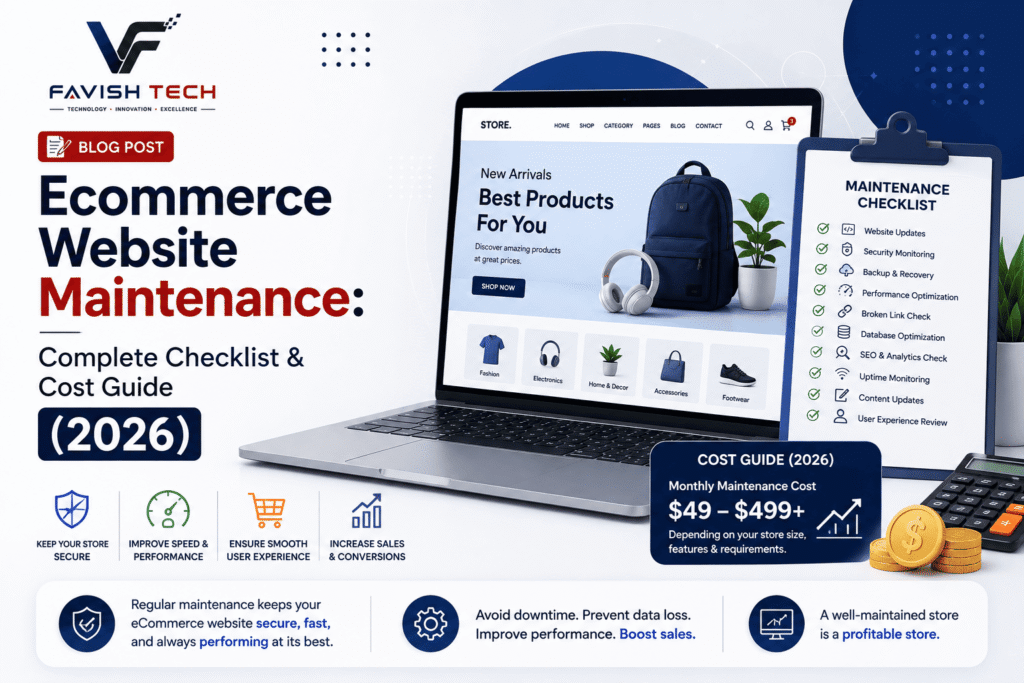
Here’s something most business owners find out the hard way: launching your ecommerce website is the easy part. Keeping it running — fast, secure, and actually selling – is the part nobody warns you about.
We get this question a lot: “My site’s live, why do I still need to pay for maintenance?” Fair question. Here’s the honest answer. Ecommerce maintenance packages
Your website isn’t a one-time build, it’s a living thing
Think about it like a shop with a physical storefront. You don’t just open the doors once and walk away forever — you restock shelves, fix the broken sign, replace the lock when it sticks. An ecommerce website works the same way. Plugins go out of date. Security threats evolve. Your checkout that worked perfectly at launch can quietly start throwing errors six months later, and you’d never know unless someone’s actually watching.
What “maintenance” actually means, broken down
Every week, someone should be backing up your site and database, checking that links and payment flows still work, and keeping an eye on load speed. This is the boring, unglamorous stuff — but it’s what prevents disasters.
Every month, plugins, themes, and your CMS core need updating. Skip this long enough and you’re one outdated plugin away from a security breach. This is also when you’d want to actually look at your analytics — not just glance at traffic, but understand what’s converting and what’s not.
Every few months, a proper security audit and a database cleanup go a long way. Old, bloated databases are one of the quiet reasons stores slow down over time — and slow stores lose customers before they even see your products.
The signs your store is overdue for maintenance
If any of this sounds familiar, it’s probably time:
- Pages that used to load fast now feel sluggish
- Customers mentioning checkout errors you didn’t know about
- A design that hasn’t been touched since launch and feels dated
- Rankings quietly slipping on Google
- That little “not secure” warning nobody wants to see
So what does it actually cost?
Honestly — it varies a lot based on how big and complex your store is. A simple catalog site with a few dozen products needs a lot less hands-on attention than a store running multiple integrations, high traffic, and constant product updates. What matters more than the number itself is what’s included — are you getting real monitoring and fixes, or just a vague “we’ll check in sometime” promise?
Here’s the part that actually matters
A lot of businesses treat maintenance as an optional extra they’ll “get to later.” But the math rarely works out that way. A few minutes of downtime during a busy sales period, or a security issue that scares off customers, almost always costs more than the maintenance would have. It’s not really an added expense — it’s insurance for the money you already spent building the site in the first place.
If you’re not sure whether your current site needs attention, that’s an easy thing to check — happy to take a look and give you a straight answer, not a sales pitch.
FAQs
Q1. What does ecommerce website maintenance include?
It typically covers backups, security updates, plugin and theme updates, speed monitoring, and regular database cleanups to keep the store running smoothly.
Q2. How often does an ecommerce website need maintenance?
Backups and security checks should happen weekly, updates and analytics reviews monthly, and full security audits every quarter — more frequently for larger or high-traffic stores.
Q3. What happens if I skip ecommerce website maintenance?
Skipping maintenance often leads to slower load times, security vulnerabilities, broken checkout flows, and declining search rankings — all of which directly affect sales.
Q4. Is ecommerce maintenance included in the website development cost?
Usually not — development and maintenance are typically billed separately. Always confirm with your developer or agency what ongoing support is included.
Q5. Can I maintain my ecommerce website myself?
It’s possible for very basic sites, but most businesses find it more reliable and cost-effective to have a developer or agency manage it, especially as the store grows in complexity.