
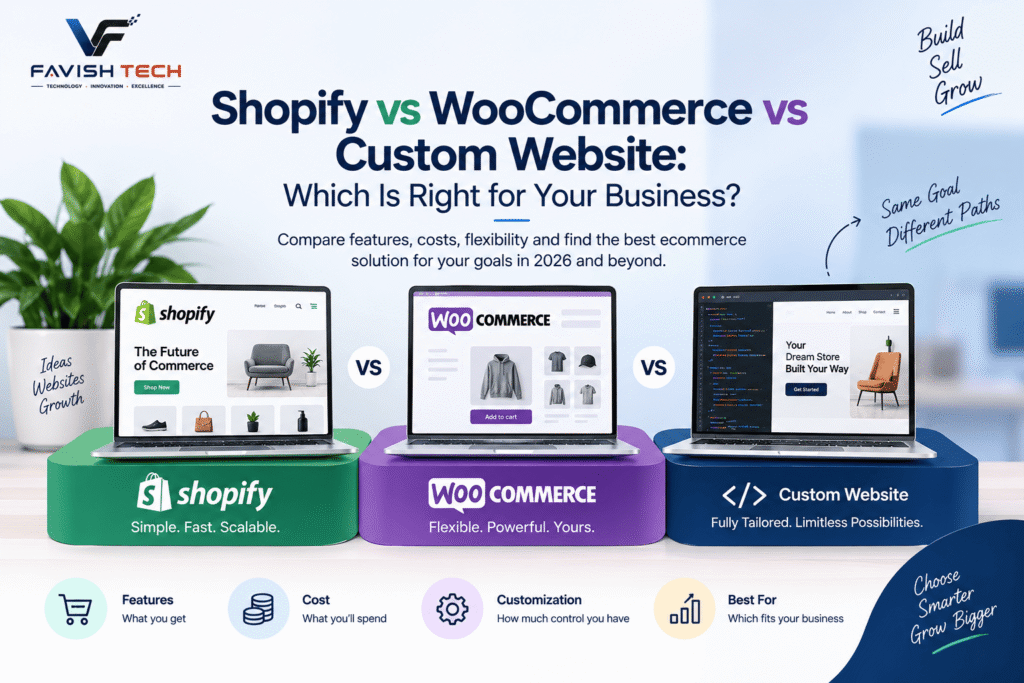
Sooner or later, almost every business owner building an online store hits the same wall: which platform do I actually build on? And every developer, friend, and YouTube video seems to have a different strong opinion. So let’s skip the hype and just talk through what each one is actually good at.
Shopify – for people who want it handled
Shopify’s whole pitch is simplicity. You sign up, pick a theme, add products, and you’re basically live. Hosting, security, uptime — all handled in the background so you’re not thinking about servers at 11pm.
The trade-off is cost and flexibility. You’re paying a monthly subscription no matter what, and once you start adding apps for reviews, loyalty programs, upsells — that bill climbs fast. And if your business needs something genuinely custom, you’ll often hit a wall where Shopify’s structure just doesn’t bend the way you need it to.
Good fit if: you want to launch fast, don’t want to think about technical maintenance, and your store fits fairly standard ecommerce patterns.
WooCommerce – for people who want control
WooCommerce runs on WordPress, so if you’re already comfortable there, it feels familiar. The big appeal is ownership — your site, your hosting, your data, no mandatory monthly platform fee. The plugin ecosystem is huge, so there’s usually a way to build almost anything you need.
The catch is that “control” comes with responsibility. You’re the one who needs to keep things updated, secure, and running well — or you need someone managing that for you (which, to be fair, is basically what maintenance plans exist for).
Good fit if: you want more flexibility long-term, you’re comfortable with a bit more hands-on management, and you’d rather invest in ownership than rent a platform forever.
Custom-built – for people whose business doesn’t fit a template
This is the option nobody picks first, and honestly, that’s usually the right instinct. Custom development makes sense when your business has something genuinely non-standard going on – a multi-vendor marketplace, subscription billing logic, deep integration with your inventory or CRM system, workflows that don’t exist as a plugin anywhere.
It costs more and takes longer, because you’re not customizing a template — you’re building software. But when a business actually needs it, nothing else really works as well.
Good fit if: your business model doesn’t fit neatly into “products, cart, checkout,” and you need something built specifically around how you actually operate.
So which one’s actually right for you?
Honestly, ask yourself these before anything else:
How fast do you need to be live? Do you genuinely need custom functionality, or does it just sound nice to have? What’s your comfort with an ongoing subscription versus a bigger upfront build? And realistically — will you need developer support either way, regardless of platform?
Most growing businesses we work with start on WooCommerce or Shopify, get real traction, and move toward custom functionality only once they actually hit the platform’s limits — not before. That’s usually the smarter order to do things in.
The honest bottom line
There’s no single “best” platform here — just the best one for what your business actually needs right now. Anyone who tells you one platform is universally superior is usually trying to sell you that one platform.
If you’re stuck deciding, it’s worth having someone walk through your actual business needs with you rather than guessing. Happy to do that if it’s useful.
FAQs
Q1. Is Shopify or WooCommerce better for a small business?
It depends on priorities — Shopify is faster to launch and requires less technical management, while WooCommerce offers more long-term flexibility and no mandatory subscription fee.
Q2. When should a business choose a custom-built ecommerce website instead?
Custom development makes sense when a business needs functionality that standard platforms don’t support well, such as multi-vendor marketplaces, subscription models, or deep third-party integrations.
Q3. Is WooCommerce cheaper than Shopify long-term?
WooCommerce can be more cost-effective long-term since it doesn’t have a mandatory monthly platform fee, but total cost depends on hosting, plugins, and maintenance needs.
Q4. Can I switch platforms later if my business grows?
Yes, businesses often start on Shopify or WooCommerce and migrate to custom solutions once they outgrow the platform’s built-in capabilities.
Q5. Which ecommerce platform is easiest to maintain?
Shopify generally requires the least hands-on maintenance since hosting and security are managed by the platform, while WooCommerce and custom sites need more active upkeep.